Rain
Ponding Rings After Storms
- You See
- Dirt rings and algae where water dried in low spots.
- What It Means
- Standing water breaks down many coatings. Silicone tolerates it, though deep ponds still get a drain or cricket fix first.

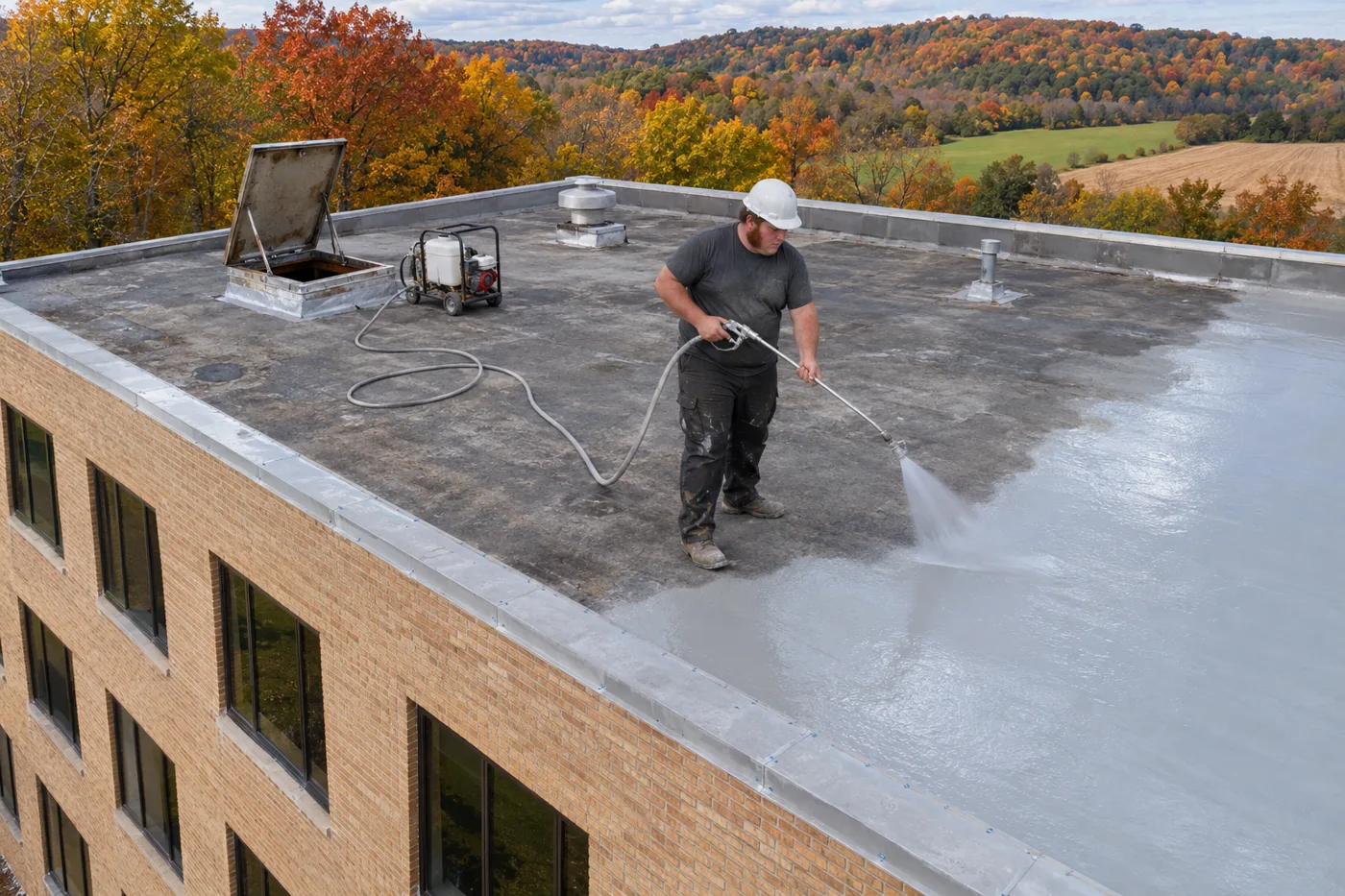
As a Bloomington silicone roof coating contractor, we spray silicone over metal, built-up, and single-ply roofs on low-slope commercial buildings after repairs and cleaning.
Bloomington silicone roof coating fits flat and low-slope roofs that are dry underneath. These checks tell us whether silicone belongs on yours.
| Check | Good Fit For Silicone | Fix Or Choose Another System |
|---|---|---|
| Slope | Flat to low slope | Steep panels that shed water fast |
| Ponding | Water that sits a day or two | Deep ponds over a sagging deck |
| Insulation | Dry core samples | Wet board under the membrane |
| Existing Surface | Metal, built-up, or single-ply | Loose gravel or blistered asphalt |
| Future Recoat | Silicone again later | Plans to switch to acrylic later |
Silicone earns its keep on these four low-slope problems.
Silicone is one of five systems we apply. Here is where the other four fit on Bloomington buildings.
Steel roofs that shed water, coated after screws and laps are sealed and rust is primed.
Low-slope and flat roofs that hold water, sprayed to full thickness over reinforced seams.
Sloped roofs with quick drainage, where a two-coat water-based system keeps material cost lower.
Roofs that need added insulation or a rebuilt slope, finished with a protective coating.
Asphalt shingle sections that are still flat and attached, using a shingle-rated coating.
Silicone restores the roof surface without tearing it off. This is how it compares with a new roof.
| What Changes | Coating The Roof | Replacing The Roof |
|---|---|---|
| Tear-Off | Old surface stays and is cleaned | Membrane and insulation removed |
| Price Range | About $2.50 to $4 per sq ft | About $5 to $8 per sq ft |
| Standing Water | Silicone tolerates ponding | New roof built with better slope |
| Sun Exposure | Bright surface reflects sunlight | Follows the new membrane color |
| Later Recoat | More silicone over clean silicone | Full system later in its life |
Ponding on a flat roof finds every weak seam. Schedule a roof walk and we will check the low spots and the insulation under them.
Get A Free EstimateSilicone goes on in one or two passes after the roof is clean and the seams are closed.
We map ponding areas, probe seams, and take moisture readings or core samples where the insulation could be wet.
Wet insulation is cut out and replaced. Blisters, splits, and failed flashings are repaired so the coating goes over a dry, closed surface.
A pressure wash removes dirt, algae, and chalk. Some roofs also get a primer to stop asphalt bleed-through or to help adhesion.
Seams, laps, drains, and penetrations get fabric or mastic bedded in silicone, since these points move the most.
Coats go on to the specified dry film thickness. We check wet film as we spray so ribs, laps, and curb edges get the full amount.
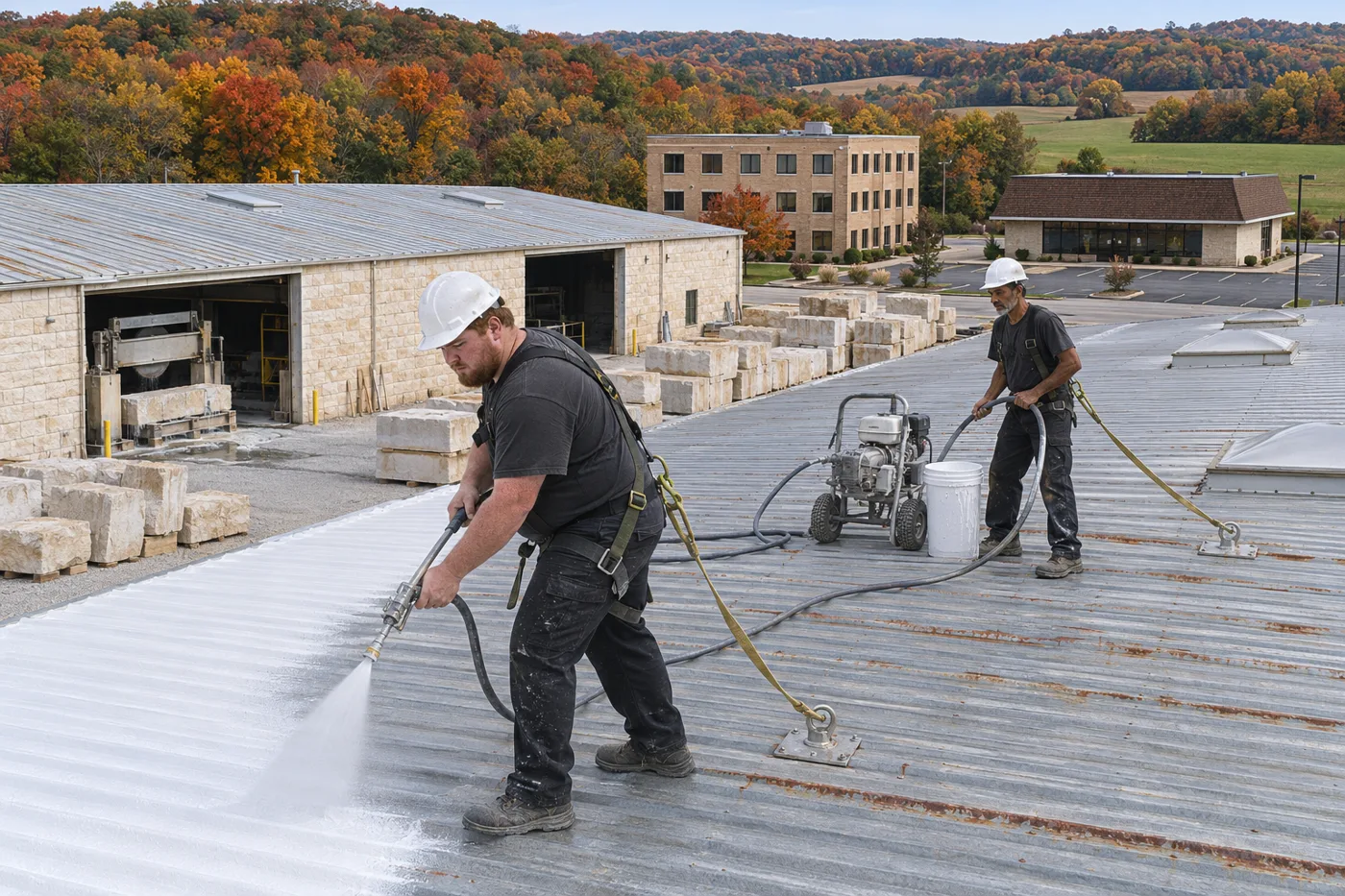
Steeper or insulated sections on the same property can take another system.
Full metal roof restoration with rust primer and sealed laps for sloped steel.
Water-based acrylic for steep roofs that drain within hours of rain.
Spray foam when the roof needs insulation and a rebuilt slope.
Shingle-rated coating for asphalt sections on the same property.
Coats, life span, and product choice come up on almost every low-slope roof walk.
Silicone is applied until it reaches a specified dry film thickness, which most systems hit in one or two coats. Seams, fasteners, and penetrations get reinforced before that. A wet-film gauge is used during spraying so ribs, laps, and the areas around rooftop units get the full amount.
Its life follows the applied thickness, the preparation, how much water ponds, and how much foot traffic the roof sees. Dirt dulls the bright surface but leaves it watertight. Cleaning, quick puncture repairs, and a fresh silicone coat at the end of its service life keep it going.
Flatter roofs that hold water after rain suit silicone. Sloped metal roofs that drain quickly suit acrylic, which costs less per gallon. Acrylic accepts other materials later, while silicone takes only silicone over it. We look at slope, drainage, and future plans before recommending one.
Applied over clean, primed, dry steel with seams and fasteners reinforced, silicone stays flexible and handles standing water and UV, which makes it a good match for low-slope sections. Structural problems and wet insulation are fixed first, because coating over them traps the trouble underneath.
Cooler air bothers silicone less than water-based coatings, yet the roof still has to be dry and above the product's minimum surface temperature. Frost, dew, and morning condensation are the usual obstacles in Indiana, so spraying often starts after the surface dries in late morning.
Pricing falls within our published coating range of about $2.50 to $4.00 per square foot, set after an inspection. Wet insulation replacement, seam reinforcement, drain repairs, primer for bleed-through, and roof access all move the price within that range.
Tell us how long water sits on your roof after rain. We check the low spots and price a silicone system for the roof.