Sun
Faded South-Facing Panels
- You See
- Paint on the sunny slope is lighter and chalkier than the north side.
- What It Means
- The sun side wears first. A bright acrylic finish protects the steel and reflects heat off the panels.

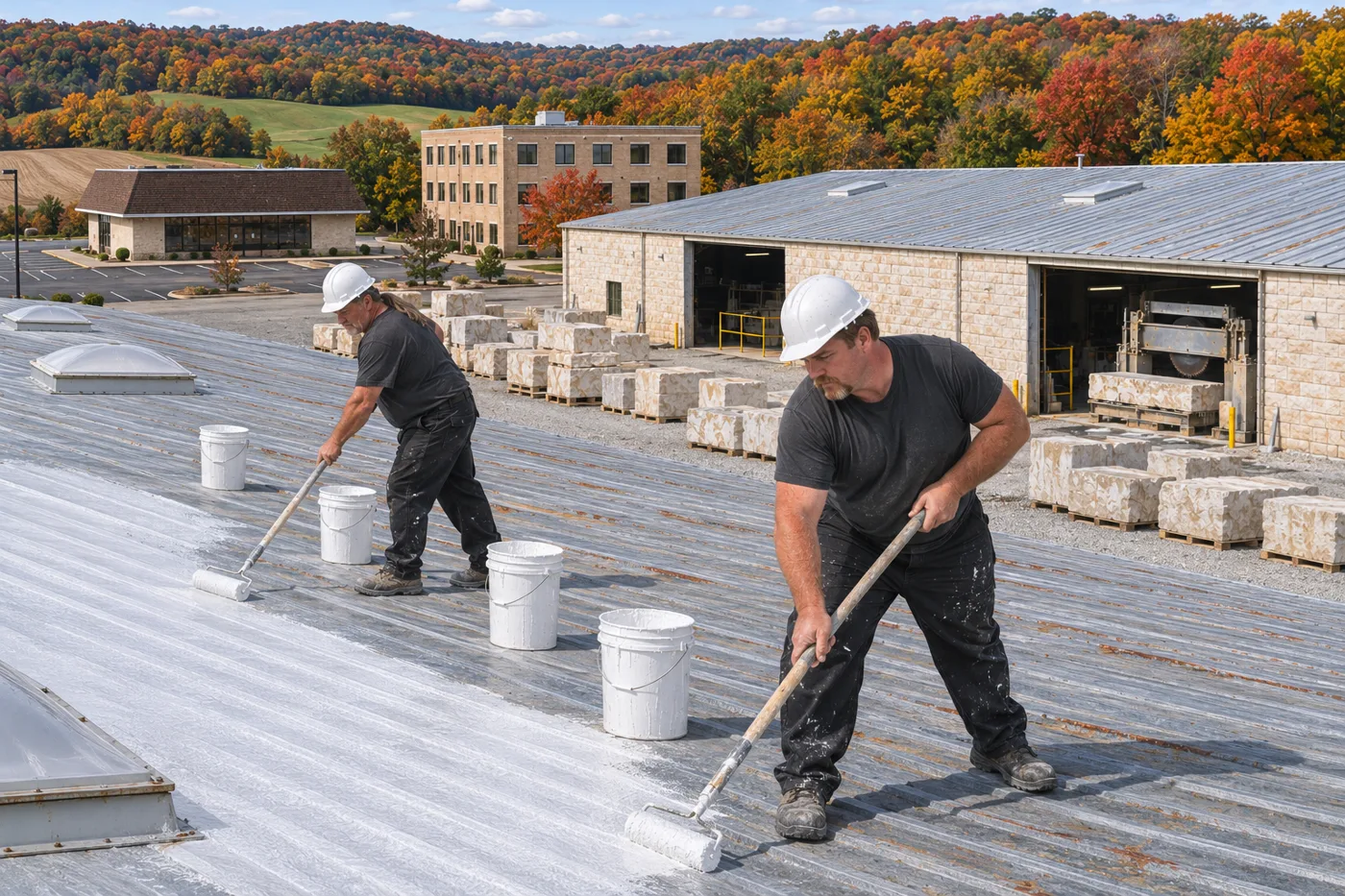
As a Bloomington acrylic roof coating contractor, we roll and spray water-based acrylic onto sloped metal roofs that drain fast, after the rust and laps are fixed.
Bloomington acrylic roof coating works on sloped metal that sheds water within hours. These checks show when acrylic fits and when another system fits better.
| Check | Good Fit For Acrylic | Choose Another System |
|---|---|---|
| Slope | Sloped panels that drain fast | Flat areas that pond |
| Season | Spring to fall, dry forecast | Cold nights or rain within hours |
| Existing Finish | Factory paint or old acrylic | Old silicone coating |
| Rust | Surface rust, primed | Rust holes through panels |
| Budget | Lower material cost per gallon | Highest film build in one pass |
Acrylic answers these four common conditions on sloped Bloomington roofs.
We match each roof area to the system that fits it. Acrylic is one of five.
Complete metal roof restoration for steel with rust and loose screws, with the coating chosen to match.
Silicone for low-slope or flat sections where water sits after storms.
Acrylic for sloped panels that drain quickly, applied in two contrasting coats.
Spray foam for roofs that need insulation, with acrylic or silicone as the topcoat.
Shingle coating for asphalt sections that are flat and well attached.
Acrylic keeps sloped steel in service at a lower material cost. Here is how it compares with new panels.
| What Changes | Coating The Roof | Replacing The Roof |
|---|---|---|
| Existing Panels | Cleaned, primed, and kept | Taken off and replaced |
| Price Range | About $2.50 to $4 per sq ft | About $5 to $8 per sq ft |
| Heat Gain | Bright finish reflects sunlight | Follows the new panel color |
| Work Window | Dry, mild days | Most of the year, weather allowing |
| Recoat Path | Acrylic or other coatings later | Paint or coat new panels later |
Chalky panels are the sign to coat before rust starts. Book a roof walk and we will test the surface and plan the acrylic coats.
Get A Free EstimateAcrylic cures by drying, so the schedule follows the weather between coats.
We check slope and drainage, test the old paint for chalk and adhesion, and mark rust spots, loose screws, and open laps.
Loose screws are replaced, and side and end laps get fabric and mastic so the joints stay closed when the panels move.
The roof is pressure washed and left to dry. Rusted and bare steel gets primer as soon as it is dry and clean.
One color goes on first across the full roof. It has to dry before the next coat, which takes longer on humid days.
A second color shows any thin or missed areas. We check thickness and walk the roof with you at the end.
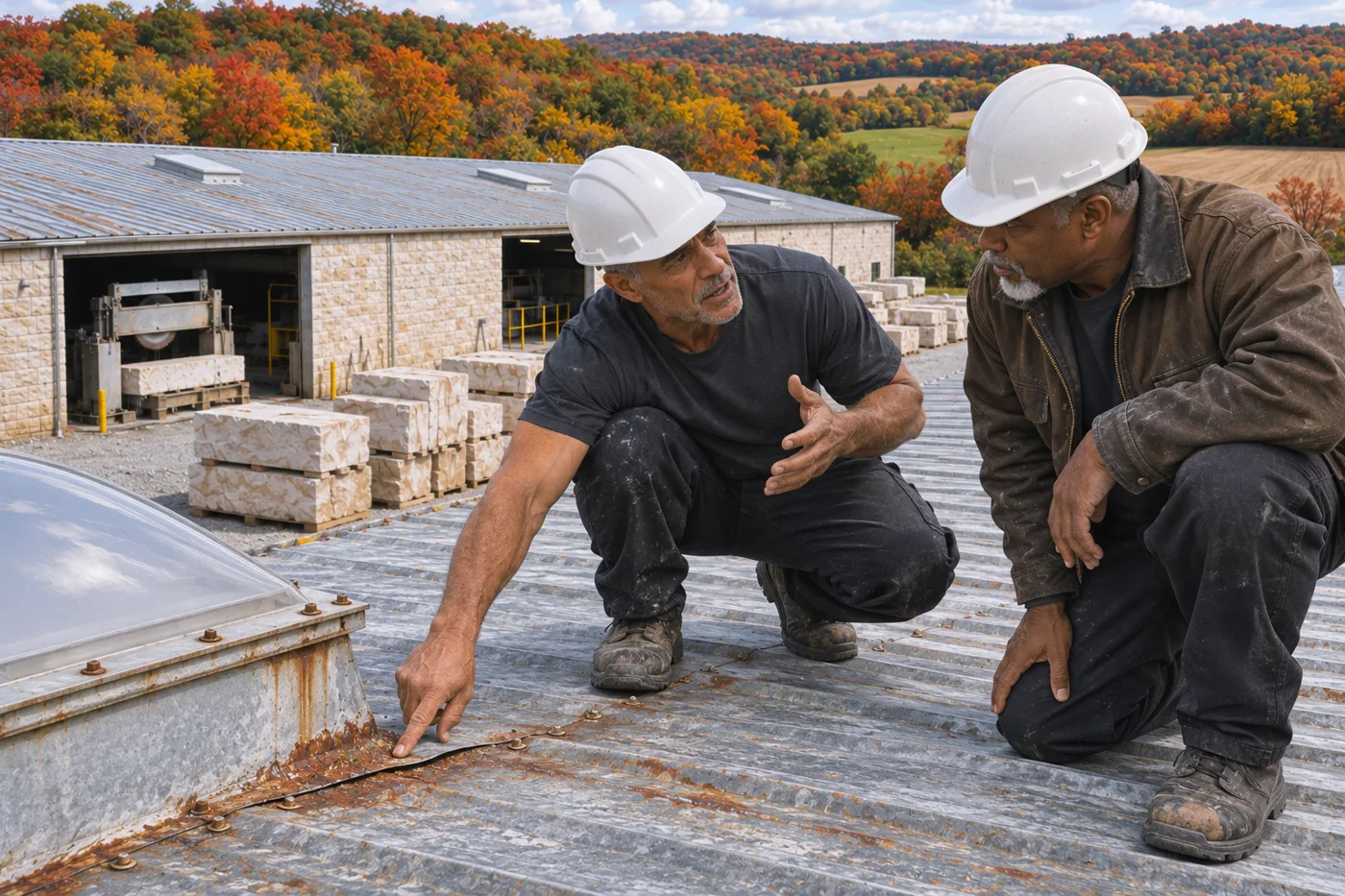
Wet or insulated parts of the roof can need a different service.
Full restoration with rust treatment and lap sealing for heavily rusted steel.
Silicone for flat sections where acrylic would sit under water.
Spray foam for roofs that need insulation or a new slope.
Coating made for asphalt shingles on office or church sections.
What owners ask before choosing acrylic for a sloped metal roof.
Film thickness, slope, drainage, and cleaning quality set the life of an acrylic roof. Roofs that shed water fast get the most from it. Ponding, piled debris, and foot traffic wear it sooner, and a recoat at the right time extends it.
On clean, primed steel, acrylic grips firmly and stretches with the panels as they expand in July and contract in January. It stays bright and reflects sunlight. Low spots that hold water need a fix or a different coating in those areas.
Two or more coats reach the specified dry film thickness, often in contrasting colors so coverage is easy to confirm. Each coat dries before the next one goes on. Humidity and temperature change drying time, so the schedule leaves room for weather between coats.
Sloped metal sections that drain well take acrylic after a thorough wash, because stone dust weakens adhesion. Rusted laps and screws get primer and reinforcement. Flatter areas where water sits suit silicone better, so some mill roofs end up with both.
Water-based acrylic needs air and surface temperatures above the maker's minimum, a dry roof, and several hours without rain after application. In Indiana that means late spring, summer, and early fall, with starts after the morning dew has dried.
Acrylic sits within our coating range of about $2.50 to $4.00 per square foot, with the price set after an inspection. The amount of rust treatment, lap sealing, screw replacement, roof size, and access change where your roof falls.
Old acrylic and most factory paints accept new acrylic once they are washed and pass an adhesion test. A previous silicone coating is the exception, since acrylic will not stick to it. We cut a few test patches during the inspection to see what the old film is.
Send the roof size and a photo of the sunny slope. We check the paint and price two acrylic coats for the building.